 International Bass Fishing™
THE DEPTH CHART / DIY
Build your own baits. Keep the heat, fumes and lead in check.
Making lures is one of the best winter projects in fishing. It also involves hot liquid plastic, solvent paints and, for some projects, lead. This guide puts the safety rules from EPA, CDC and the material makers first, then walks you through three projects: painting store-bought jigheads, pouring soft plastics, and carving a wooden popper, with a risk rating for each.
Catching a bass on a bait you made is a special thrill, and home lure-making lets you try colors and shapes no store carries. But this hobby is not like tying knots. Liquid plastic is poured hot, paints and clear coats give off fumes, and lead, the traditional jighead metal, is a toxic metal with no known safe level for children. So this guide starts with safety and builds the projects around it.
We sorted the projects by risk. Beginners should start with the lowest-risk work: brush-painting store-bought unpainted jigheads and building a wooden popper. Families with children should start with the popper, since most jigheads are lead. Soft-plastic pouring is an adults-only, well-ventilated step up. Melting lead is the one project we recommend you skip entirely.
Read before you start
Safety first: the ground rules
| Hazard | Where it shows up | What the sources say to do |
|---|---|---|
| Lead dust and particles | Melting or handling lead jigs and sinkers | Don’t make lead jigs at home (EPA); wash hands, change clothes, keep lead away from kids (EPA, NIOSH) |
| Plastisol fumes | Heating soft-plastic liquid | Do not overheat; heat only with exhaust ventilation (SDS) |
| Burns | Hot plastisol, hot pots, molten metal, heated jigs for powder paint | Gloves, long sleeves, eye protection (MLF, Barlow’s) |
| Steam spatter | Water touching hot plastic or metal | Keep all moisture away (MLF, UAH) |
| Paint and solvent vapors | Spray paint, clear coats | Fresh air, fan blowing out, follow the label (EPA) |
Controls summarized from the agency and manufacturer sources linked in each row.
Keep children out of the work area for any heating, lead or solvent step. CDC says no safe blood lead level in children has been identified (CDC), EPA notes young children who crawl can pick up lead dust on their hands (EPA), and EPA’s painting guide advises that pregnant women avoid painting projects (EPA). Kids can help with sanding and drawing designs, and with water-based paint on wooden lures under adult supervision. Keep lead jigheads out of children’s hands.

The biggest risk
Lead: buy unpainted jigheads, don’t melt
Pouring your own jigheads looks simple in videos. The risks are not. In guidance still posted on its archive site, EPA “strongly advises against home manufacturing of lead sinkers and jigs,” warning that melted lead can produce airborne particles that move around your house (EPA). CDC lists casting fishing weights among hobbies that can expose you to lead and says adults can bring lead home and expose their families without knowing it; most people exposed have no symptoms (CDC). Molten metal adds another hazard: a university foundry safety sheet warns that even trace moisture meeting molten metal can cause steam explosions (UAH).
Our recommendation for beginners is simple: buy unpainted jigheads from a tackle shop and do the creative part (painting, eyes, skirts, trailers) at home. If you want to avoid lead altogether, look for jigheads and weights made from non-lead metals.
Even store-bought lead needs care. EPA says to wash your hands thoroughly after handling lead sinkers and never to put one in your mouth or bite split shot (EPA). NIOSH notes ordinary soap and water are not enough to remove all lead dust and recommends soap made to remove lead (NIOSH). Don’t eat or drink at the bench, and launder hobby clothes separately (EPA).
If an adult in your household still chooses to cast lead, EPA says to use proper ventilation and protective equipment when melting it (EPA), and Michigan’s lead program advises working with lead in a well-ventilated area outside the home (Michigan). Talk to a health care provider about blood lead testing if you think anyone has been exposed (CDC). We do not give lead-casting instructions here.

Project 2
Pouring soft plastics (adults only)
Soft-plastic baits are usually made from plastisol, a liquid that turns into a soft solid when heated to its conversion temperature and then cooled. One supplier, Barlow’s, lists that conversion temperature as 350°F and says liquid plastic should be heated only in well-ventilated areas, with protective clothing and eyewear (Barlow’s). In Major League Fishing’s hand-pouring guide, Charles Waldorf describes working with plastic at 325 to 350 degrees that turns clear around 340 (MLF).
Overheating is the main thing to avoid. A 2003 plastisol safety data sheet from manufacturer PolyOne says degradation begins after one hour at 350°F, after 10 minutes at 400°F and within 5 minutes at 450°F, and that breakdown can release hazardous products including hydrogen chloride and carbon monoxide. It says to heat the material only with appropriate exhaust ventilation (PolyOne SDS). Your plastisol may differ, so always read the SDS and instructions for the product you buy.
How fast one plastisol starts to break down
Minutes at temperature before degradation, from one manufacturer’s safety data sheet.
Published plastisol temperature figures
Degrees Fahrenheit, as each source states them.
A safe soft-plastic workflow
- Read the SDS and label first. Note the maker’s heating temperature, time limits and ventilation requirements.
- Set up ventilation. Waldorf pours in a garage with doors and windows open and a fan moving fumes away (MLF). The SDS calls for exhaust ventilation.
- Dress for heat. Safety glasses, heat-resistant gloves, long sleeves, long pants and closed shoes. Waldorf’s gear list also includes a respirator (MLF); follow your product’s SDS on respiratory protection. Clear the bench of anything flammable and keep a fire extinguisher within reach.
- Keep it dry. Waldorf warns that moisture turns to steam on contact and makes hot plastic spew (MLF). Keep drinks and wet tools away.
- Shake, then heat slowly. Barlow’s says to shake for 15 to 30 seconds and let it sit about 5 minutes to release bubbles (Barlow’s). Heat in a dedicated container with a thermometer, and if you use a microwave, use one that will never be used for food again. Waldorf reheats in 15- to 30-second bursts, stirring each time (MLF).
- Stop if it smokes, yellows or scorches. That is overheating. Turn off the heat, ventilate and let it cool.
- Pour, cool, demold. Fill the mold steadily, let baits cool fully before handling, and never leave heating plastic unattended.
Waldorf notes heated plastisol can burn skin very quickly (MLF). Keep a clear path, keep kids and pets out, and use equipment dedicated to lure-making, never kitchen cookware or a food microwave. Follow your heater maker’s safety rules.

Project 1
Painting jigheads and clear coat
Painting store-bought unpainted jigheads is the best first project. Brush-on or air-dry hobby paint is the low-risk route: paint, add stick-on eyes and finish with a clear coat. Powder paint is different: the jighead is first heated, typically in a flame or a 325°F oven, then swished through the powder, and some makers recommend a 350°F oven cure (Mud Hole). That makes it an adults-only heat step. Use a dedicated toaster oven or tool, never one used for food, and keep the flame well away from the powder. With air-dry paint, the fumes are the main hazard. EPA’s painting guide calls for plenty of fresh air, a box fan in a window blowing out, frequent fresh-air breaks and following every label instruction, and it notes short-term solvent exposure from oil-based (alkyd) paints can be significantly higher than from latex (EPA).
- Clean the heads. Wipe off oil so paint sticks. Wear gloves when handling lead heads, and wash your hands afterward.
- Block the hook eye. Plug it with a toothpick or wire so paint doesn’t fill it.
- Paint outdoors or with a fan blowing out. Light coats dry faster and chip less than one thick coat.
- Add details. Eyes, gill marks and spots, using a fine brush or a dotting tool.
- Clear coat. Brush or dip a clear coat to protect the finish. Two-part epoxies and solvent clears vary; follow the label, wear gloves and ventilate.
- Cure fully, then seal containers. EPA notes vapors can leak from badly sealed cans. Store leftovers tightly closed and away from kids.

Project 3
Build a beginner wooden popper
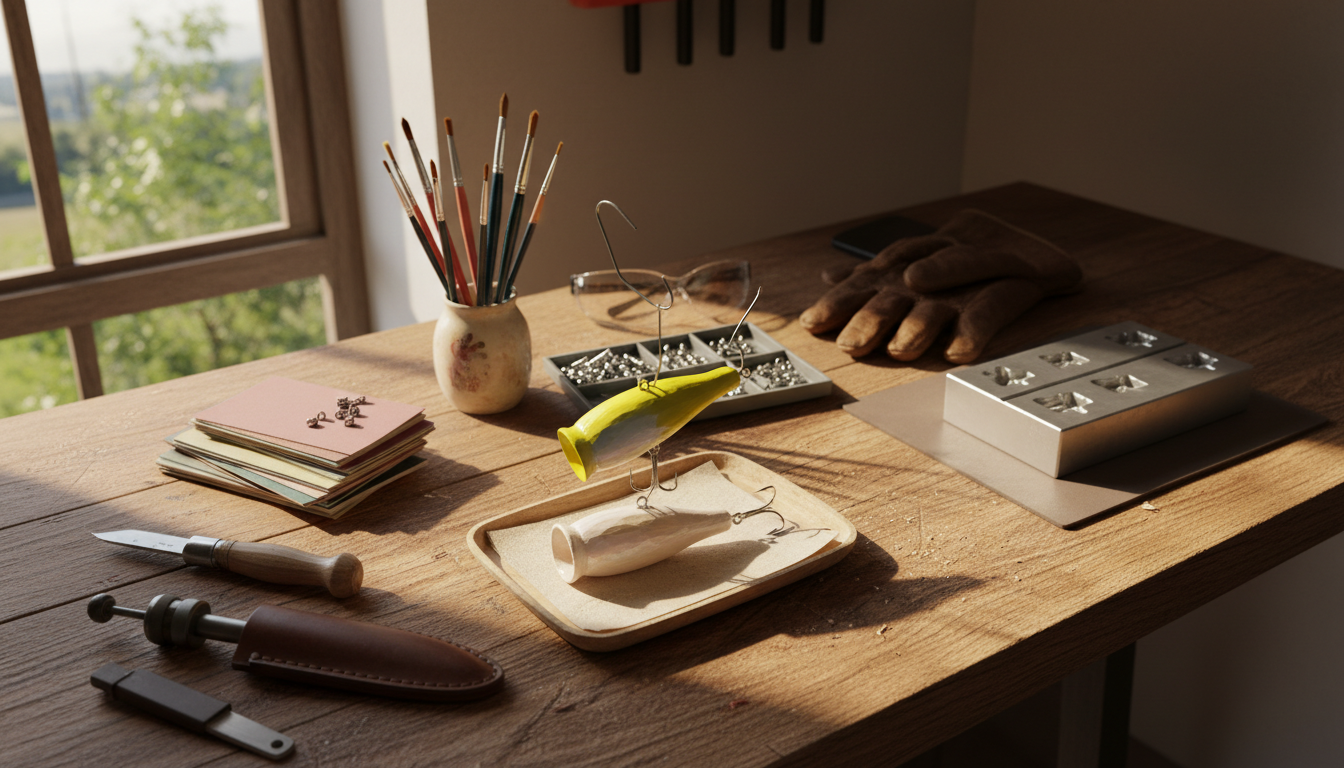
Many classic topwaters started out in wood: Bass Pro Shops notes the original Zara Spook was carved from white cedar before switching to plastic (Bass Pro Shops). A simple popper is the easiest wooden lure to make because it only needs a straight body and a cupped face.
Tools and materials
- A soft, light wood dowel or block (cedar, basswood or balsa); softer woods are easier to shape
- Fine-tooth handsaw or coping saw, a bench vise or clamp, and sandpaper in coarse to fine grits
- Hand drill with small bits, or a pin vise; a round file or rotary tool with a sanding drum for the cupped face
- Small screw eyes for the line tie and hook hangers, and two treble hooks with split rings
- Water-based primer and paint, then a clear coat suited to water use
- Safety glasses, a dust mask for sanding, and gloves for finishing
- Cut the blank. Clamp the wood and cut a short body roughly the size of a store-bought popper. An adult should do all sawing and power-tool work.
- Shape the body. Taper the tail with sandpaper. Keep it symmetrical so it sits straight.
- Cup the face. Use a round file or sanding drum to hollow the front. A deeper cup throws more water.
- Seal the wood. Bare wood soaks up water. Seal it fully before painting.
- Install hardware. Drill small pilot holes and twist in screw eyes: one at the front for the line, one on the belly and one at the tail for hooks.
- Float test in a sink. Most poppers float at a tail-down angle. If yours lies flat, add a small non-lead weight (a steel screw or similar) near the tail; if it sinks, remove some.
- Paint and clear coat. Follow the painting section above; let it cure fully.
- Add hooks last. Attach trebles with split rings using split-ring pliers, and keep the finished lure in a box with hook covers.
Clamp work instead of holding it, cut away from your body, and wear safety glasses for drilling and sanding. Children should do only hand sanding and painting with water-based paint, with an adult handling saws, drills, hooks and clear coats.
DIY lure projects by risk
Darker cells mean higher risk.
| Project | Heat | Fumes | Lead | Who should do it |
|---|---|---|---|---|
| Paint store-bought jigheads | None (air-dry paint) | Paint vapors | Handling only | Adults; kids only with non-lead heads |
| Wooden popper | None | Paint vapors | None | Beginners; adult does tools |
| Pour soft plastics | High | Possible if overheated | None | Adults only, ventilated |
| Melt lead jigheads | Very high | Lead particles | High | Not recommended |
Field test
Test it on the water
Every homemade bait needs a swim test in calm water. North Carolina’s Lake Norman State Park has a separate Park Lake with quiet fishing spots and paddling (NC State Parks), and in Texas, TPWD notes you do not need a license to fish from shore inside a state park such as Caddo Lake (TPWD).
Live conditions
Live weather for a test session
Loading live conditions…
Air conditions from the Open-Meteo forecast model, refreshed when the page loads. This is not water temperature, a fishing forecast or a marine warning — check the National Weather Service and your lake operator before launching.
See our Lake Norman page and the locations hub. Then fish your new popper with tips from the topwater guide, rig your soft plastics with the Texas rig guide, and dress your painted jigheads using the Ned rig guide.
FAQ
Frequently asked questions
Is it safe to pour lead jigheads at home?
EPA has strongly advised against home manufacturing of lead sinkers and jigs because melted lead can produce airborne particles that spread through a house. We recommend buying unpainted jigheads instead.
What temperature should I heat plastisol to?
Follow your product’s instructions and SDS. One supplier lists 350°F as the conversion temperature, and one SDS warns degradation starts after an hour at 350°F and within minutes at higher temperatures.
Can my kids help make lures?
Yes, with the low-risk parts: sanding a wooden body, drawing designs and painting wooden lures with water-based paint under supervision. Keep lead jigheads away from them, and keep them out of the area for any heating, lead or solvent work.
What wood is best for a first popper?
A soft, light wood such as cedar, basswood or balsa is easiest to shape and floats well. Seal it completely before painting so it does not absorb water.
Do I need special soap after handling lead?
NIOSH says standard soap and water are not enough to completely remove lead dust and recommends soap designed to remove lead. Always wash before eating or drinking.
Show off your builds in the community, find more gear ideas on the gear page, or watch how-tos in Watch & Learn.
Sources / review date
Built on sources you can check.
Reviewed October 17, 2026. Regulations, access and conditions change; confirm with the agency or operator before you go. Tactics are original IntlBass guidance, not guarantees. See our editorial standards; send corrections through Contact.
- EPA: Humans and lead fishing sinkers (archived), Actions you can take (archived), Reduce the risk of lead exposure at home — home lead manufacturing, hygiene, kids
- CDC: Lead in jobs and hobbies, Childhood lead poisoning prevention — casting hobbies, no safe level
- NIOSH: Lead information for workers — lead-removal soap, hygiene
- Michigan Lead Safe: Jobs and hobbies — fishing sinkers/jigs, work outside home
- PolyOne plastisol safety data sheet — degradation temperatures, decomposition products, ventilation, PPE
- Barlow’s Tackle: liquid plastic — 350°F conversion, ventilation, shaking
- Mud Hole: Applying powder paints — powder paint heating and curing
- Major League Fishing: How to hand-pour swimbaits — working temperatures, moisture, burns, ventilation
- University of Alabama in Huntsville: Foundry safety — molten metal and moisture, PPE
- EPA: Healthy Indoor Painting Practices — painting ventilation, labels, children, pregnancy
- Bass Pro Shops: Zara Spook history — original cedar lure
- NC State Parks: Lake Norman SP; TPWD: Caddo Lake SP — testing locations, license note
- Wikipedia coordinates: Norman, Caddo, Fork, Guntersville — weather widget locations
Leave a Reply