 International Bass Fishing™
Bass Species Atlas
THE BASS SPECIES ATLAS
Know the fish.
Understand the water.
Explore 12 source-backed species profiles, original 360° anatomical studies and regional map references. Start with the fish’s family: black bass, temperate bass, Australian bass and peacock bass have different histories, habitats and life cycles.
This edition covers 12 profiles. It is not an exhaustive checklist of every fish called bass.
INTLBASS™ / 360° FIELD STUDY
Largemouth bass
Micropterus nigricans · Centrarchidae
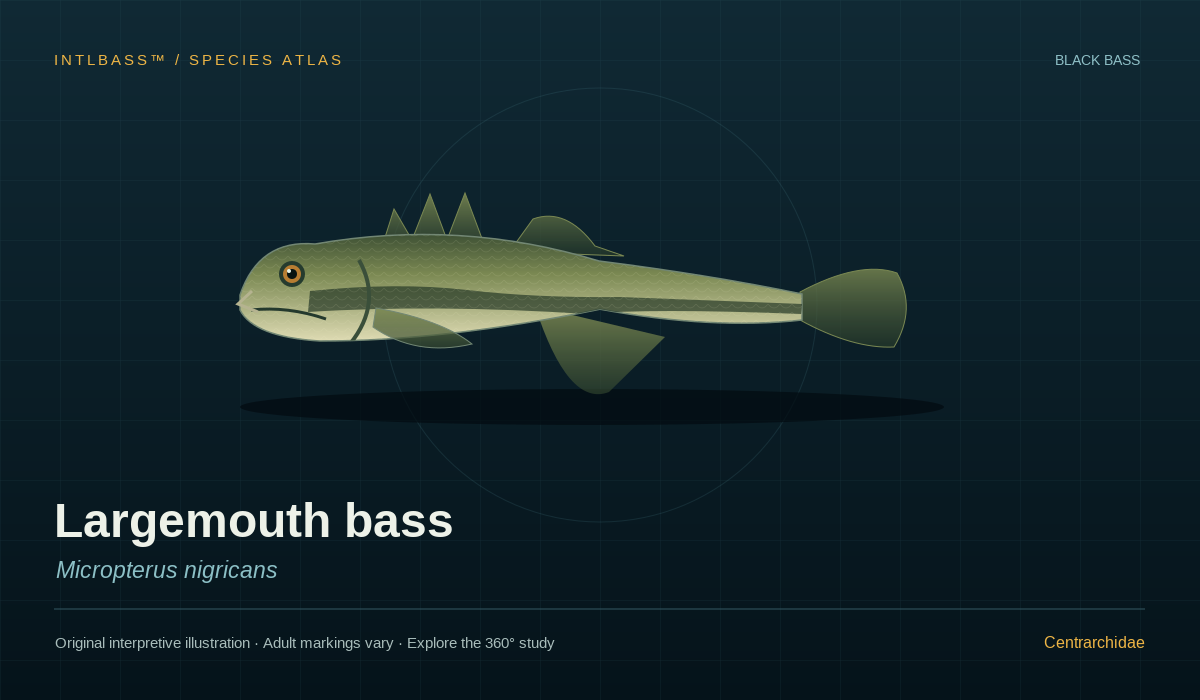
Drag to orbit · Scroll or pinch to zoom · Arrow keys rotate · Shift + arrows move · R resets
Comparison uses equal illustrated body length, not actual adult size.
Loading the interactive illustration…
Older sources may use M. salmoides broadly. Appearance cannot reliably separate Florida bass and hybrids.
Read the full species guide →Illustration accuracy & sources
Original IntlBass 3D artwork with source-informed silhouette, fin layout and representative adult markings. This is an interpretive illustration, not a specimen scan, measured anatomical reconstruction, genetic test or identification key. Fin-ray counts, teeth, sex, age, regional forms and fine-scale proportions are simplified. Individual colors and markings vary. Largemouth and Florida bass deliberately share closely similar anatomy.
- FWC · 2024 scientific-name update ↗
- TPWD · Largemouth biology (older naming) ↗
- USGS · Largemouth profile and occurrence database ↗
Source review: October 10, 2026. Text and maps below explain identification limits.
Choose your next deep dive.
12 species profilesBlack bassLargemouth bass
Micropterus nigricans
The cover-oriented predator behind so much of bass fishing.
 Black bass
Florida bass
Micropterus salmoides
A distinct species, a famous trophy fish, and a naming story worth getting right.
 Black bass
Smallmouth bass
Micropterus dolomieu
Bronze flanks, rocky water and a different habitat story.
 Black bass
Spotted bass
Micropterus punctulatus
Rows of flank spots—and an identification trap with Alabama bass.
 Black bass
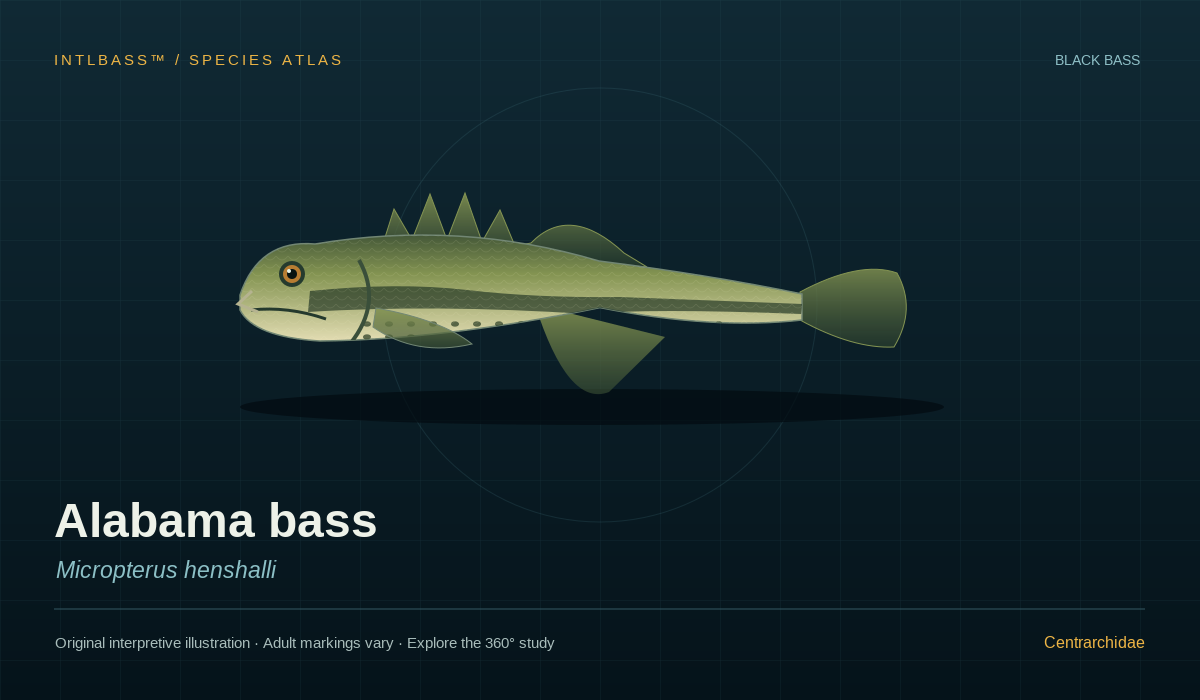
Alabama bass
Micropterus henshalli
Native in one drainage, a serious conservation problem when moved to others.
 Black bass
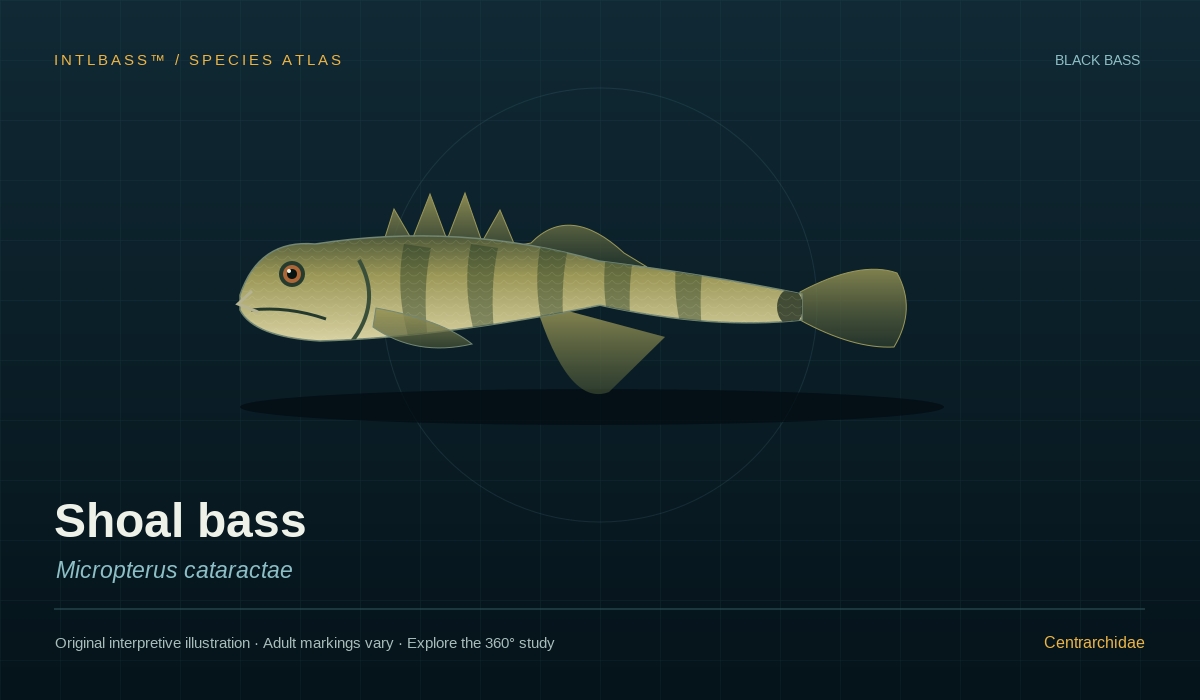
Shoal bass
Micropterus cataractae
A river specialist defined by current, rock and drainage history.
 Black bass
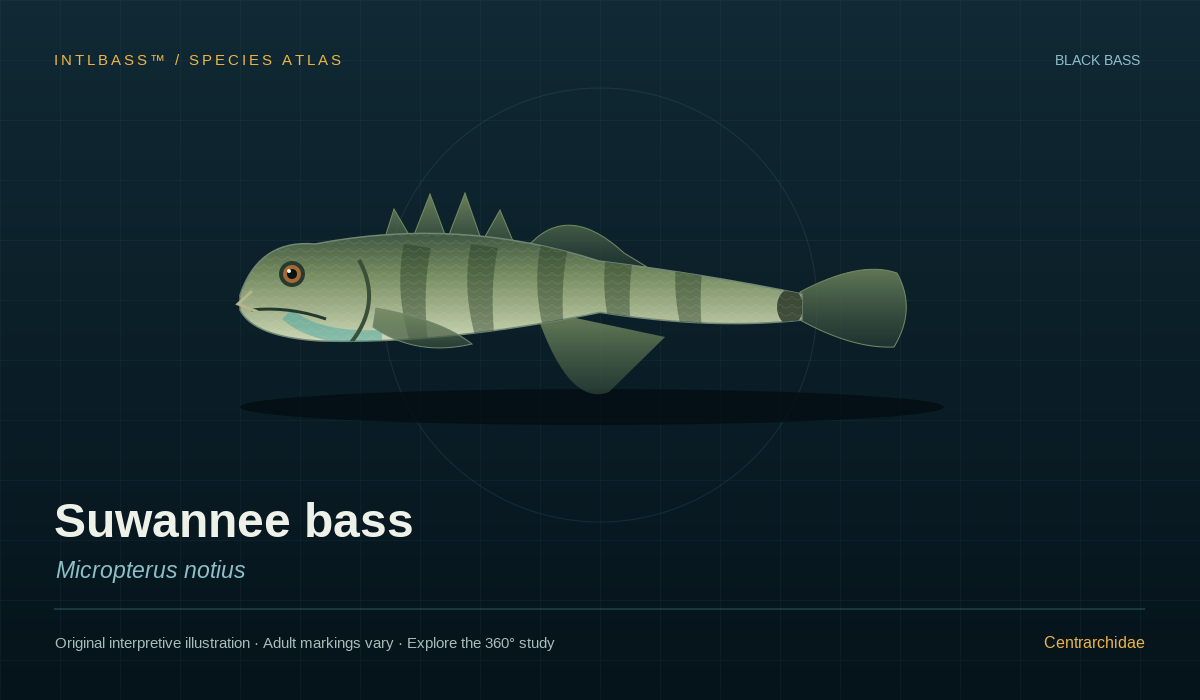
Suwannee bass
Micropterus notius
A compact river bass with limestone habitat and turquoise breeding color.
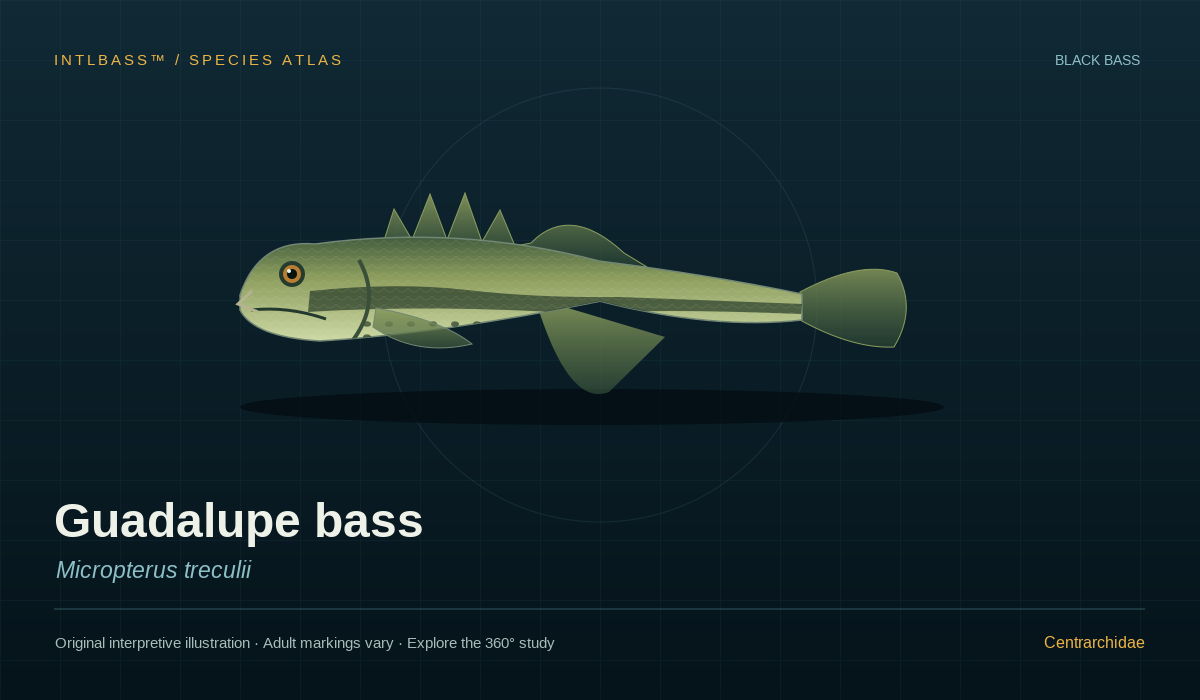 Black bass
Guadalupe bass
Micropterus treculii
Texas’ state fish—and a conservation story written in flowing water.
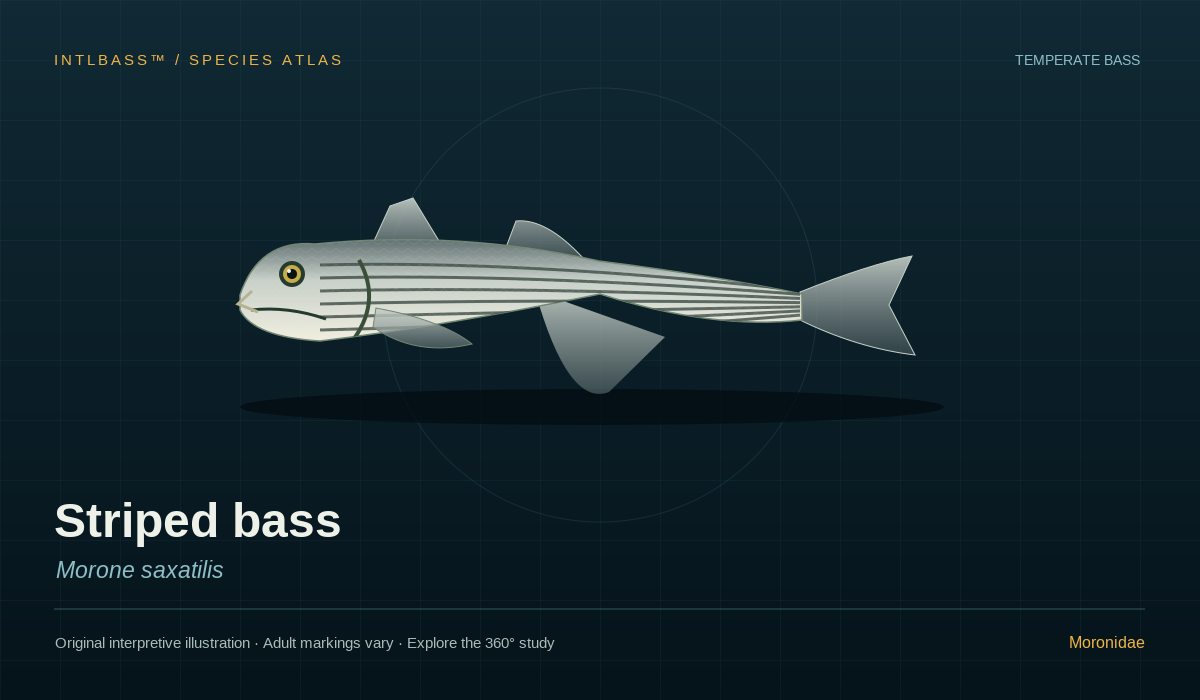 Temperate bass
Striped bass
Morone saxatilis
An Atlantic migrator with a separate inland-fishery story.
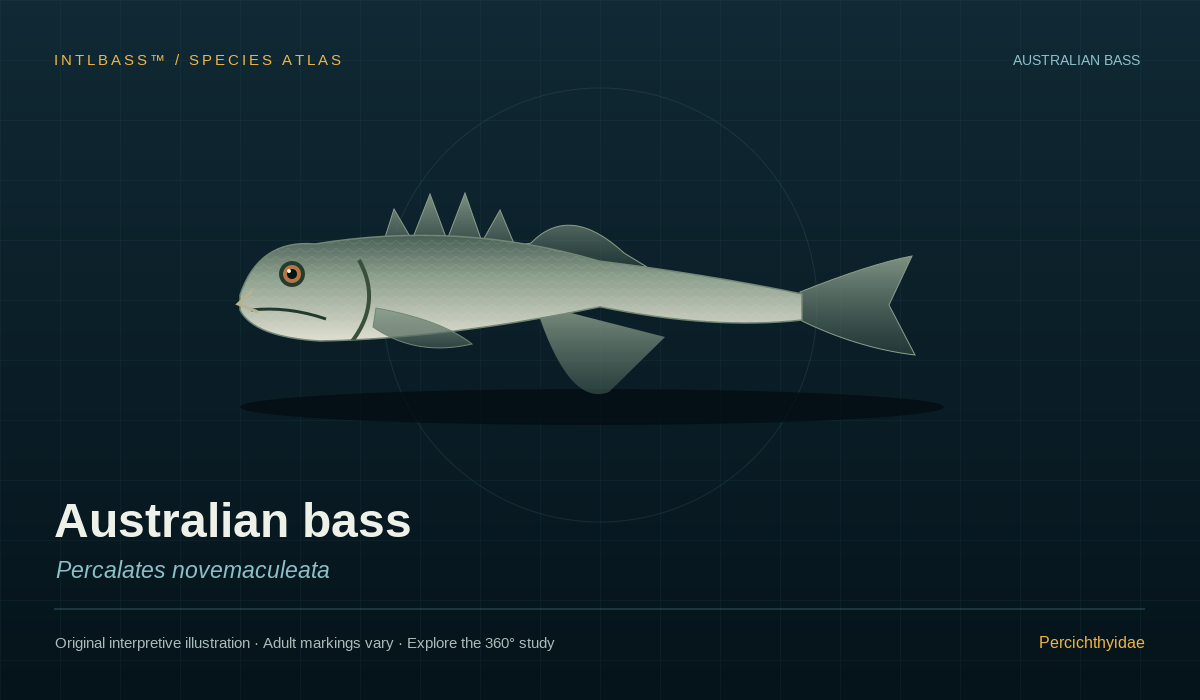 Australian bass
Percalates novemaculeata
Freshwater resident, estuary spawner, and an eastern Australian original.
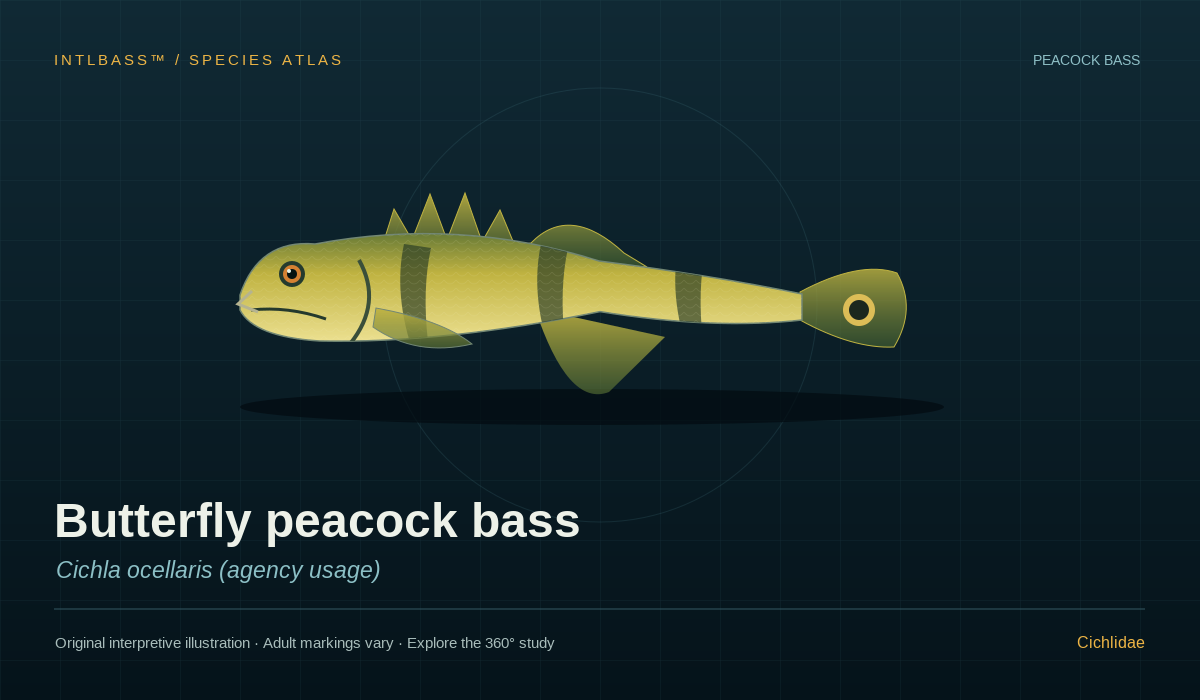 Peacock bass
Butterfly peacock bass
Cichla ocellaris (agency usage)
The colorful Florida canal fish is a cichlid, with a taxonomy caveat.
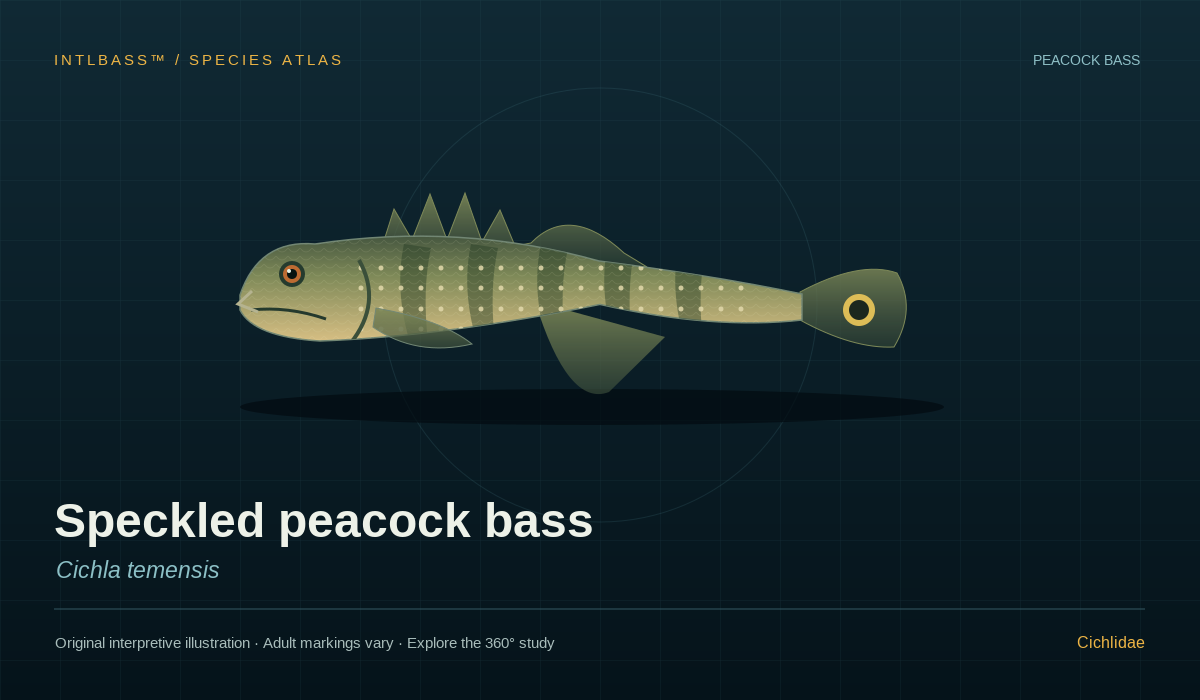 Peacock bass
Speckled peacock bass
Cichla temensis
Speckled and barred forms can be the same species at different reproductive stages.
No profiles match. Clear the filters or try another name.
Good fish information starts with a good distinction.
A common name is a starting point.
Black bass are sunfishes in Micropterus. Striped bass belong to Morone. Australian bass are Percalates, while peacock bass are cichlids in Cichla. Similar names do not make these interchangeable species.
Maps need context.
Our pins orient you to source-described regions or fisheries. They are approximate references, not specimen observations, public-access promises, catch forecasts or complete range boundaries. Each pin links to its evidence.
Names change. Old records remain.
Florida bass use M. salmoides and largemouth bass use M. nigricans under the naming adopted by FWC in 2024. Older books and agency pages may use previous names. We explain that difference rather than silently combining them.
Read the FWC naming explanation ↗THE BASS SPECIES ATLAS
One name. Many different fish.
Black bass, striped bass, Australian bass, and peacock bass belong to different fish groups. Explore the species behind the common names, then follow fisheries and scientific sources for identification and distribution.
Start with the family
| Common name or group | Scientific name / family | Explore reliable information |
|---|---|---|
| Largemouth bass | Micropterus nigricans / Centrarchidae | USGS species profile & occurrence records |
| Florida bass | Micropterus salmoides / Centrarchidae | FWC: naming update and distribution context |
| Smallmouth bass | Micropterus dolomieu / Centrarchidae | USGS native range framework |
| Shoal bass | Micropterus cataractae / Centrarchidae | FWC: range and conservation research |
| Suwannee bass | Micropterus notius / Centrarchidae | FWC: black bass diversity |
| Striped bass | Morone saxatilis / Moronidae | NOAA Fisheries |
| Australian bass | Percalates novemaculeata (formerly Macquaria novemaculeata) / Percichthyidae | Fishes of Australia: species profile |
| Peacock bass | Cichla species / Cichlidae | USGS nonindigenous fish database |
Why scientific names matter
Older sources often apply Micropterus salmoides broadly to largemouth bass. Florida’s fisheries agency announced in July 2024 that Florida bass use that scientific name while largemouth bass use Micropterus nigricans. Historical records, retailer copy, and scientific papers can therefore use different names for fish that anglers recognize as largemouth-type bass. Read the date and naming convention before combining datasets. Read the FWC explanation →
Black bass are sunfishes. Similar common names do not make striped bass, Australian bass, and peacock bass members of the black bass genus. That distinction matters when comparing biology, conservation, tournament rules, records, and introduced populations.
Read distribution maps carefully
A native range is different from a documented introduction, a stocking record, an established population, or an individual observation. None of those records establishes public fishing access. Use the originating fisheries agency to interpret a map and the local land or water manager to confirm access. The tournament globe shows listed event venues; it is not a worldwide species distribution map.
Native waters
Introduced populations
Regional fish science
Explore a creator-hosted 3D reference
View a public-domain black-bass model by ffish.asia / floraZia.com. The creator identifies it as Micropterus sp. and leaves the species uncertain; it is a genus-level visual reference, not an identification key for largemouth or Florida bass. Rendering and orbit controls require a compatible device and the external viewer.
Creator-listed license: CC0 Public Domain · Source reviewed October 10, 2026. Explore the 12 original species illustrations and source-described regional map references in the interactive atlas above. This external model remains a genus-level reference.
Initial species reference index. Source review: October 10, 2026. Taxonomy and distribution coverage will expand with each reviewed species profile.