 International Bass Fishing™
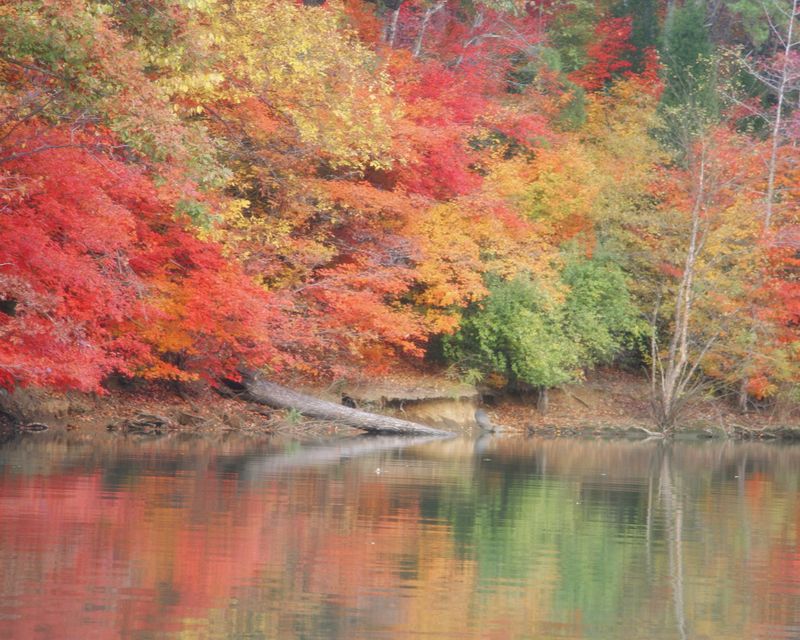
Fall color on Lake Wylie. Photo: Wikiwikicat / Wikimedia Commons, public domain.
THE DEPTH CHART / FALL PATTERNS
Find the shad and you've found the fall bass.
As days shorten and water cools, baitfish pour into the creeks and bass chase them. Fall can be the best fishing of the year or the most frustrating. The difference is knowing where the bait is in the transition.

Why fall changes
Why bass move in the fall
All summer, many reservoirs are layered: warm surface water over a thermocline over cold, oxygen-poor deep water. Georgia DNR's Lake Lanier fact sheet describes a summer thermocline 20 to 30 feet thick, with deep water dropping below 3 ppm of dissolved oxygen, too low for fish (Georgia DNR). As air temperatures fall, the surface cools and the layers break down, and both baitfish and bass get the whole water column back. Our oxygen and thermocline guide explains summer layering in detail.
Threadfin and gizzard shad respond to cooling water and shorter days by moving shallow and up the creeks. Bass follow the food, and they feed hard ahead of winter.
The three stages
Early, middle and late fall
| Stage | Surface temp | Where the bass are | Approach |
|---|---|---|---|
| Early fall | Low 80s falling to mid-70s | Still on summer spots, starting to roam points and creek mouths; schooling begins | Topwater at dawn, then summer offshore patterns |
| Mid fall | Mid-70s to low 60s | Back halves of creeks, flats, docks and wood near the bait | Cover water fast: squarebill, spinnerbait, buzzbait, swim jig |
| Late fall | Low 60s to low 50s | Back toward creek mouths, channel swings and main-lake points | Jerkbait, crankbait, jig, shaky head; schools on sonar |
- Find bait first. Look for flipping shad, birds working, and bait balls on sonar. A creek with no bait is a creek with no bass.
- Move fast until you get bit. Fall bass are scattered and chasing. Cover water with moving baits.
- Slow down where you find them. When you catch one, fish the area thoroughly with a slower bait; they're often grouped.
- Keep a schooling rod ready. A topwater or jerkbait on deck catches surfacing fish that disappear in seconds.
Turnover
What turnover really is
"Turnover" is when the cooled surface water becomes as dense as the bottom water and the lake mixes. It can bring a few days of stained water, a funky smell and tough fishing. On deep Southern reservoirs it may happen late: Georgia DNR says Lake Lanier's turnover generally occurs around Christmas, after which the lake is about 45–50°F and oxygenated top to bottom. Many anglers blame "turnover" for any bad fall day, but shifting bait and passing fronts are more often the cause. If a creek looks dirty and dead, try a clearer one or the main lake.
Small ponds can turn over suddenly after a cold rain. The Missouri Department of Conservation explains how pond turnover can cause fish kills in rare cases. If you manage a pond, our pond guide has more.
Baits
Best fall bass lures
- Topwater: walking baits, poppers and buzzbaits for schooling and shallow fish.
- Squarebills: bounce off wood, docks and rock in the backs of creeks.
- Spinnerbaits and bladed jigs: shad imitators for stained water and wind.
- Paddletail swimbaits: match shad size; on Lake Norman, smaller is usually better.
- Lipless crankbaits: flats and grass edges as water drops into the 60s.
- Follow-ups: a shaky head or jig for fish that won't chase.
Match size and color to the bait you see; our forage guide explains how, and The 10 Best Bass Lures rounds up the staples.
Lake Norman in fall
How the fall pattern plays out on Lake Norman
Lake Norman shows every stage. In November 2019, guide Gus Gustafson told Carolina Sportsman that Lake Norman's spotted-type bass were "bulking up for winter and roaming the lake in large schools," especially below the NC 150 bridge, holding 10 to 20 feet deep on point edges and in lower-lake creeks such as Davidson, Ramsey, Mountain and Reeds, around docks near deep channels and around boat ramps (Carolina Sportsman). He kept a small topwater ready all day.
Tournament results match. At the October 2020 Toyota Series on Lake Norman, the top 10 used a mix of deep spots, brush-laden docks skipped with jigs, buzzbaits between docks, drop shots on shoals and topwaters and jerkbaits for schooling fish (MLF). David Williams caught the event's heaviest limit, 13 pounds, 6 ounces, skipping docks with a flipping jig and using a pencil popper on schoolers.

For the rest of the year on Norman, see our Lake Norman seasonal playbook; for neighboring lakes, the Catawba River lakes guide.
FAQ
Fall bass fishing FAQ
Where do bass go in the fall?
They follow baitfish, usually from main-lake summer spots into creeks and onto flats in mid-fall, then back toward creek mouths and points as the water gets colder.
What is the best lure for fall bass fishing?
Shad-imitating moving baits: squarebills, spinnerbaits, swimbaits, lipless crankbaits and topwaters. Keep a slow bait for follow-ups.
Does fall turnover ruin fishing?
It can make one area tough for a few days. Move to clearer water or another creek. On deep Southern lakes, true turnover often comes late in the year.
What water temperature is best in the fall?
The mid-70s to low 60s is usually the heart of the creek bite.
Sources / review date
Built on sources you can check.
Reviewed November 12, 2026. Temperature stages are IntlBass guidance. See our editorial standards.
Leave a Reply