 International Bass Fishing™
The Depth Chart / Field Notes · 8 minute read
Learn proper bass catch-and-release handling, photo techniques, and livewell management. Protect the mucus coat, avoid jaw hyperextension, minimize air exposure, and follow agency guidance for healthy fish survival.


A successful release is decided long before a bass returns to the water. Anglers often measure the outcome of catch-and-release by whether a bass darts downward when placed back in the lake. However, swimming away strongly is an immediate escape reaction, not definitive proof of long-term survival. Delayed mortality can develop hours or days later if a bass sustains physical trauma to its jaw, loses protective mucus, or suffers prolonged oxygen deprivation. Protecting sport fisheries requires an intentional sequence from initial tackle selection to final release.
Both weekend anglers and tournament competitors can reduce post-release stress by organizing tools beforehand, handling fish horizontally with wet hands, and managing livewells using verified water-quality basics rather than unvetted home chemical mixtures. The objective is practical: keep handling brief, protect body tissues, and treat recovery as a biological process that depends on how the fish was treated on the water.
Preparation Before the Catch: Rigging and Deck Setup
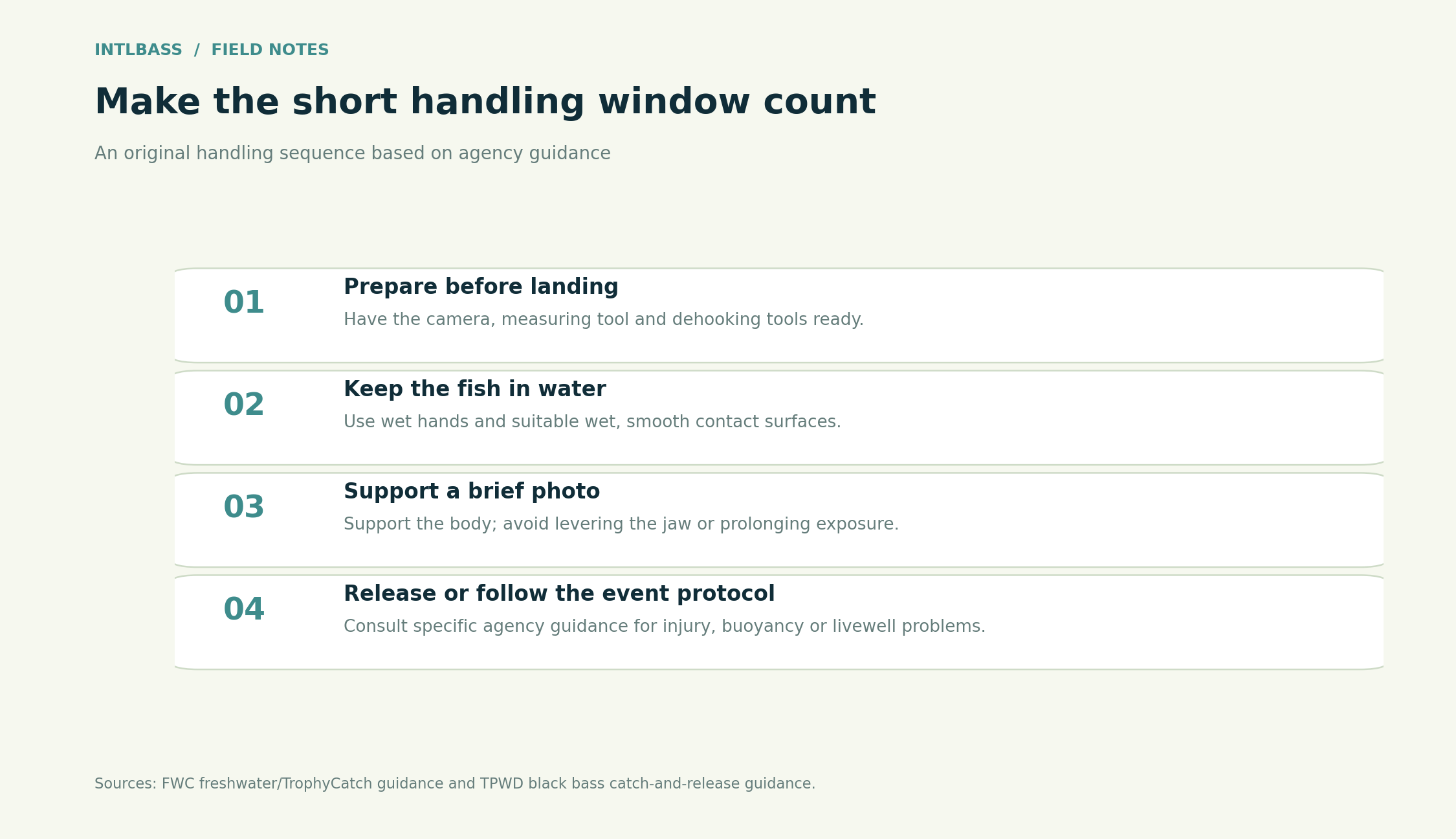
Fish care begins before the first cast. Scrambling across boat compartments for pliers, measuring boards, or a camera after landing a bass dramatically increases air exposure. A prepared work area ensures every step takes seconds rather than minutes.
Tackle choice also plays a decisive role. Using appropriate tackle matched to the surrounding cover and target fish size shortens the fight. When bass are fought to total exhaustion on excessively light gear, they develop high levels of metabolic fatigue. Guidance from the Texas Parks and Wildlife Department emphasizes using adequate gear to land bass quickly, which preserves the fish’s energy reserves and limits stress.
Establish these deck habits prior to fishing:
- Position unhooking tools within reach: Keep long-nose pliers and line cutters accessible so you never leave a fish flopping while searching for tools.
- Wet down measuring boards and work areas: Dry plastic, hot boat carpet, and sun-baked aluminum scrape away the fish’s protective mucus layer.
- Stage cameras in advance: Ensure phones or cameras are powered on and set up before taking the fish out of the water.
- Know local regulations: Use our identification overview, then check current official local length, harvest and licensing rules. Start with our Largemouth Bass: Identification, Habitat & Fishing Guide or browse the wider Bass Species Atlas to avoid retaining ineligible fish.
Landing, Unhooking, and Mucus Protection
How an angler lands and unhooks a bass sets the baseline for its survival. Hoisting a heavy bass into a boat solely by the fishing line concentrates force on the hook puncture site and risks dropping the fish onto the deck. Landing the fish with wet hands or a landing net designed to minimize abrasion provides far better support.
A bass relies on its exterior mucus layer as a primary shield against bacteria, fungi, and parasites. Dry surfaces, dry hands, and abrasive handling strip this protective coating. Wetting your hands in the lake water before touching the fish helps preserve this natural barrier.
Whenever practical, keep the fish in the water alongside the boat or shoreline while removing the hook. If a hook is deeply embedded near the throat or gills, blind or forceful pulling can tear vital blood vessels. Rather than yanking on embedded terminal tackle, avoid blind pulling and consult official wildlife agency hook-removal guidance for that specific situation. In many instances, agency advice recommends cutting the line close to the hook eye to avoid fatal tearing, but anglers should check specific regional guidance for difficult hookings rather than treating line-cutting as a universal remedy.
Safe Grips: Avoiding Jaw Hyperextension and Internal Strain
Holding a heavy bass horizontally by the lower lip with a single hand puts excessive strain on its jaw. The musculoskeletal structure of a black bass is built for underwater suction feeding, not for supporting its own weight against gravity when held by the lower jaw.
Avoid bending the jaw outward or using it as a lever to hold the body horizontal. Supporting the body reduces strain and makes a brief, controlled photograph easier.
Official guidance from the Florida Fish and Wildlife Conservation Commission TrophyCatch program stresses supporting horizontal fish with two hands and avoiding hyperextension of the jaw. When handling bass, apply these two mechanical holds:
- Vertical Lip Hold (Smaller Fish Only): Hold the fish straight up and down by the lower lip. Do not angle the body outward. Larger bass should not be suspended vertically by the jaw alone due to increased strain on the head and spine.
- Two-Handed Horizontal Support: Use one wet hand to grip the lower lip gently while placing your other wet hand under the fish’s belly forward of the anal fin. This distributes the fish’s weight evenly without torquing the jaw or compressing internal organs.
Photographing the Catch Without Prolonged Air Exposure
Fish gills function in water. Keeping a fish out for repeated photographs adds handling and air exposure, so prepare the camera first and make the handling period as short as practical.
The FWC freshwater release tips recommend keeping air exposure under 30 seconds. This 30-second window is an upper-bound guideline rather than an entitlement or a guarantee of survival; less air exposure is always better. Keep the fish submerged in a landing net or livewell while the camera is adjusted, lift it smoothly for a brief photo with two hands, and return it to the water promptly.

Tournament Livewell Care: Aeration, Temperature, and Water Quality
Holding bass in a livewell during tournament competitions requires diligent monitoring. An unmonitored livewell quickly becomes a hazardous environment, especially during hot summer events.
Agency guidance from the FWC highlights several core livewell practices: fill livewells with clean water drawn directly from the lake or river being fished, run aeration and oxygenation systems, and actively monitor water temperature. Never fill a livewell or temper water with chlorinated tap water, as chlorine can harm sensitive gill tissues. Furthermore, anglers should avoid arbitrary chemical additives, salt mixtures, or temperature-drop recipes that are not backed by fisheries science.
Key livewell practices include:
- Continuous Aeration: Keep aerator pumps running to maintain high dissolved oxygen levels, especially when holding multiple fish.
- Regular Water Exchanges: Cycle fresh water into the tank during the day to clear out metabolic waste such as ammonia.
- Temperature Monitoring: Track livewell water temperature against the lake’s surface temperature. Surface water in a sealed tank can warm rapidly, and sudden temperature fluctuations can stress fish.
- Rules Compliance: Verify event weigh-in policies and handling standards by consulting Tournament Registration & Rules.
Worked Comparison: Two Approaches to Handling
The practical difference between careless handling and a structured workflow is demonstrated when comparing two approaches for managing a landed bass:
| Handling Element | Unprepared Approach | Structured Workflow |
|---|---|---|
| Landing and Deck Staging | Fish is swung onto dry carpet while the angler searches for pliers. Mucus coat is stripped. | Fish is held in a wet net in the water. Pliers and board are pre-wetted and ready on deck. |
| Hook Extraction | Yanking firmly on a deeply seated hook, tearing tissue and provoking bleeding. | Fish remains in water; hook position is inspected cleanly. Blind pulling is avoided. |
| Lifting and Photography | Bass is held horizontally by the lower lip with one hand for 60 seconds while adjusting a phone. | Camera is already framed; fish receives two-handed support for a brief photo and is promptly returned. |
| Release or Livewell Staging | Fish is tossed back, assuming a fast swim-away confirms recovery. | Fish is revived in water until balanced, or placed into a clean, aerated livewell. |
Deep-Caught Fish and Barotrauma
When bass are caught from deeper water and brought to the surface, the sudden drop in hydrostatic pressure causes gases inside the swim bladder to expand. This condition, known as barotrauma, can prevent the bass from maintaining an upright posture or swimming back down to depth.
Agency and tournament guidance can differ for deep-caught bass. Seek the applicable fisheries guidance before the trip and do not attempt puncturing procedures without appropriate training. Do not assume a method demonstrated for another species or fishery is suitable here.
Catch-and-Release Best Practice Checklist
Keep these baseline steps in mind during your fishing day:
- Pre-wet all contact surfaces: Hands, nets, and measuring boards should always be wet before touching a bass.
- Keep the fight brief: Use tackle heavy enough to retrieve fish without exhausting them completely.
- Support large bass horizontally: Use two hands to spread the weight and avoid hyperextending the lower jaw.
- Minimize out-of-water time: Treat the FWC 30-second window as an upper-bound agency guideline rather than a guaranteed safe allowance, keeping exposure as short as possible.
- Maintain clean livewell water: Pump clean water from the fishery, aerate continuously, and avoid chlorinated water sources.
Frequently Asked Questions
Does a bass swimming away quickly mean it survived the catch?
No. A strong immediate departure does not establish long-term survival. Fish that swim off vigorously can still suffer delayed mortality hours or days later from extreme metabolic fatigue, internal injury, or secondary infections caused by damaged mucus layers.
Why should I avoid holding a bass horizontally by its lower jaw alone?
A bass’s jaw structure and cartilage are designed for underwater feeding, not for supporting its full weight out of the water. Tilting a bass horizontally by its lip places unnatural leverage on the jaw hinge, which can tear connective tissues or dislocate the jaw, leaving the fish unable to feed effectively.
Can I add household salt or ice to my tournament livewell?
You should not use unverified home additives, salt mixtures, or direct ice without clear guidance. Improvised chemical recipes can stress the fish’s osmoregulatory system, and municipal ice made from chlorinated tap water can harm gill tissues. Stick to clean lake water, active aeration, and official agency or tournament recommendations.
What should I do if a bass cannot swim back down after being caught deep?
Do not attempt to puncture the fish with household needles or safety pins. Improper venting can cause fatal internal bleeding. Instead, consult your local fisheries agency or tournament organizers for approved mitigation protocols, such as calibrated descender devices or regulated venting tools.
Leave a Reply