 International Bass Fishing™
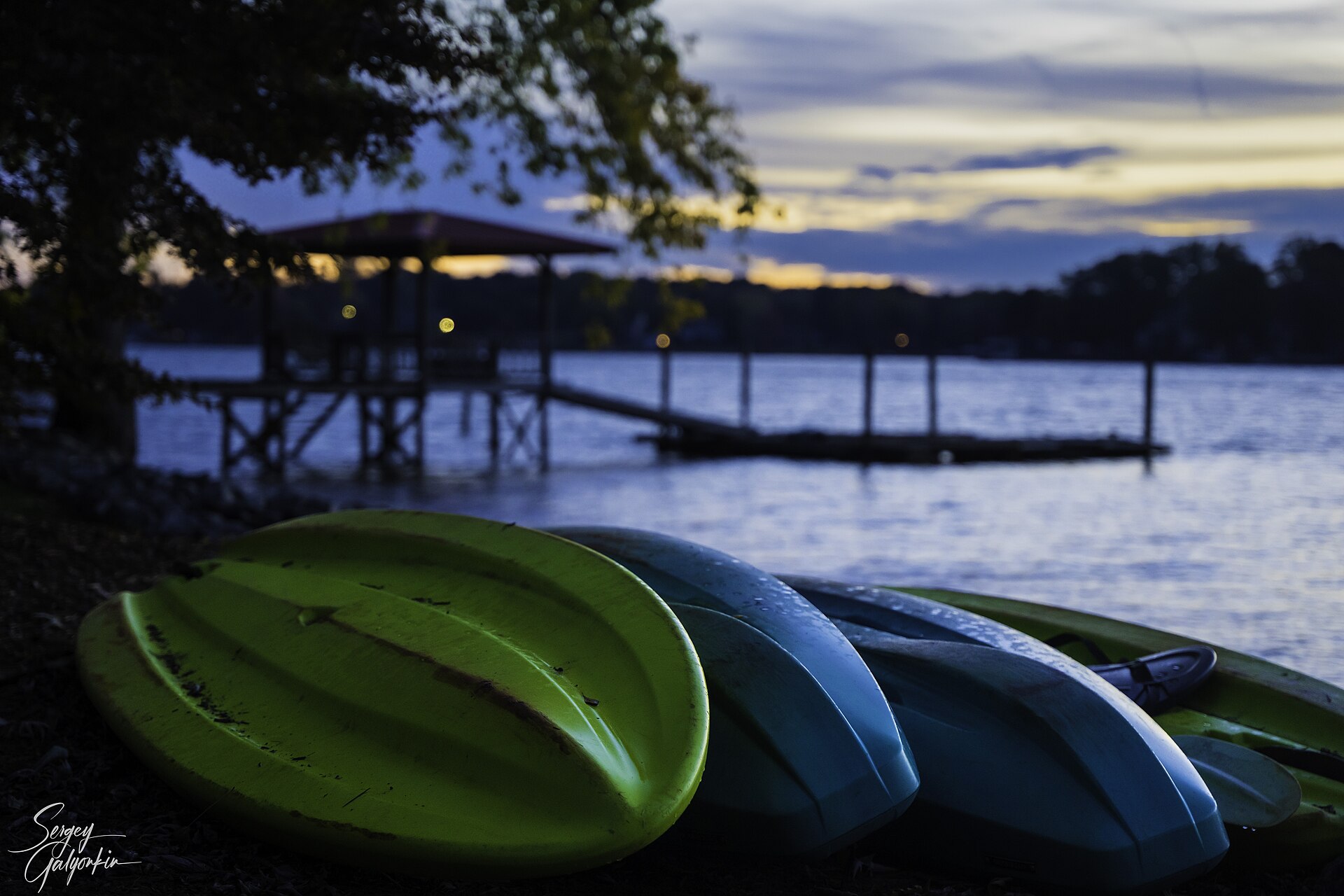
Kayaks on Lake Norman. Photo: Sergiy Galyonkin / Wikimedia Commons, CC BY-SA 2.0.
THE DEPTH CHART / KAYAK FISHING
A kayak gets you to bass a boat can't reach.
Kayaks slip into backwaters, ponds and shallow creeks, launch almost anywhere, and cost a fraction of a bass boat. Kayak tournaments have grown into national series. Here's how to set one up, stay safe and fish your first event.

Choose a kayak
Picking a bass fishing kayak
| Type | Best for | Trade-offs |
|---|---|---|
| Sit-on-top paddle kayak | Ponds, small lakes, creeks; first kayak | Affordable and simple; slower over long distances |
| Pedal-drive kayak | Big lakes, wind, tournaments | Hands-free boat control; heavier and pricier; drive can hit bottom in shallow water |
| Motorized kayak (trolling motor) | Covering big water like Lake Norman | Fast and precise; may require registration and changes lighting rules |
| Wide "standing" or twin-hull kayak | Sight fishing, flipping, anglers who want to stand | Very stable; heavier to car-top |
| Sit-inside or inflatable | Calm water, storage-limited anglers | Less stable and harder to re-enter after a capsize |
Width (stability), the weight rating (you plus gear) and whether you can actually lift it onto your car matter more than brand. Try before you buy; many dealers and paddling clubs hold demo days.
Rig it
How to rig a kayak for bass
- Two to four rods, no more. A spinning rod for finesse, a casting rod for moving baits and one heavier rod for jigs or frogs covers most days. Our rod and reel setup guide explains the combos.
- Rod holders behind or beside you so rods don't tangle when you paddle.
- A crate or tackle bin with a few boxes organized by technique.
- An anchor system: a stake-out pole for shallow water or a small anchor on a trolley so the kayak sits stern- or bow-to the wind.
- A fish finder if you fish big water. Even basic 2D sonar shows depth, bait and brush.
- A measuring board, net and lip gripper if you plan to compete.

Safety & rules
Safety and North Carolina rules
Kayaks sit low and are hard to see from a bass boat or wake boat. Treat visibility and flotation as non-negotiable.
- Wear your life jacket. North Carolina requires children under 13 to wear an approved life jacket while underway on vessels under 26 feet, and the U.S. Coast Guard requires a wearable life jacket for each person aboard. Kayak tournaments typically require you to wear one (B.A.S.S.).
- Registration. NCWRC requires registration for all motorized vessels. A paddle or pedal kayak typically doesn't need it, but if you add a motor, ask NCWRC whether yours must be registered.
- Lights after dark. Under NC rules a paddle craft may carry a flashlight or lantern ready to show a white light in time to prevent a collision. Carolina Kayak Anglers goes further for its events: a 360-degree white light mounted higher than the seat back, and red/green sidelights on powered kayaks on federal waters such as Lake Wylie and Kerr Lake (CKA). We recommend a tall all-round light any time you're out at dawn, dusk or night.
- Dress for the water, not the air. Cold water is dangerous even on a warm day; dress for immersion and carry dry clothes.
- Stay out of the way. Avoid channels, marinas and ramp lanes on busy weekends, and carry a whistle.
A kayak is the most exposed place on a lake. At the first thunder, get off the water; NWS guidance is to shelter in a substantial building or hard-topped vehicle.
Fishing from a kayak
How to fish bass from a kayak
- Go where boats can't. Back ends of creeks, shallow flats, small ponds and lakes with no gas motors. Our pond guide fits kayaks perfectly.
- Control your drift. Position up-wind and let the wind push you along a bank, or anchor and fan-cast.
- Use lighter, simpler presentations. Wacky rigs, Ned rigs, swim jigs and topwaters shine from a low seat.
- Short, accurate casts. You're closer to cover than a boat, so pitching and skipping are easier. See flipping and pitching.
Tournaments
How kayak bass tournaments work
Most kayak events are catch-photo-release (CPR). B.A.S.S. explains the routine: lay each bass on a measuring board, photograph it with the day's identifier card in frame, release it right away, and upload the photo to the event's scoring site, which posts a live leaderboard. Scoring is by total length, usually of your best few fish (B.A.S.S.).
- Get a legal board (Hawg Trough, Fish Stick or Ketch Board are common) and check the event's rules on which boards are allowed.
- Practice the photo: wet board, mouth closed and touching the bump board, whole fish and ID card in frame, take two or three shots.
- Keep GPS on if the event requires location tracking.
- Start local. Regional clubs such as Carolina Kayak Anglers run events around the Carolinas. Nationally, the 2026 Bassmaster Kayak Series included a Santee Cooper, S.C., stop on May 30–31 and a championship on Chickamauga and Nickajack lakes in Chattanooga.
Because every fish goes back immediately, CPR is gentle on fish. Still, handle them well; see our catch-and-release guide.
Lake Norman launches
Kayak bass fishing on Lake Norman
Lake Norman is big and busy, so kayakers do best early in the day, on weekdays, and in coves away from the main channel. Public options include Lake Norman State Park in Troutman, with a paddle launch and the quiet Park Lake inside the park, and Mecklenburg County's Ramsey Creek and Jetton parks in Cornelius. Duke Energy access areas around the lake are another option; Duke's rules prohibit fishing from courtesy docks, so launch and get out of the way. Our Lake Norman access guide lists sites and managers, and our Catawba lakes guide points to calmer neighbors like Mountain Island Lake.
Launch at first light, fish docks and riprap in the back of a creek with a shaky head and a small swimbait, and be off the main lake before weekend wake-boat traffic builds. Our Lake Norman seasonal playbook tells you which creeks to target by month.
FAQ
Kayak bass fishing FAQ
What is the best kayak for bass fishing?
For most anglers, a stable sit-on-top fishing kayak, with a pedal drive if you fish big or windy lakes. Pick one you can safely lift and transport.
Do I need to register a fishing kayak in North Carolina?
NCWRC registration covers motorized vessels. Paddle and pedal kayaks generally aren't motorized; if you add a motor, check with NCWRC.
Do I need a light on my kayak at night?
NC rules allow a paddle craft to carry a flashlight or lantern ready to show white light. Many tournaments require a mounted 360-degree white light, and powered kayaks on federal waters may need sidelights. Check the event rules.
How do kayak fishing tournaments score fish?
By length, from photos of each fish on a measuring board with the event's identifier card, uploaded to a scoring website.
Sources / review date
Built on sources you can check.
Reviewed November 12, 2026. Rules change; check NCWRC and event rules before you go. See our editorial standards and Boats & Kayaks.
- B.A.S.S.: How kayak bass tournaments work
- B.A.S.S.: 2026 Bassmaster Kayak Series schedule
- Carolina Kayak Anglers: NC Wildlife and U.S. Coast Guard lighting rules explained (2024)
- NCWRC: Boating Laws & Safety
- NCWRC: What is vessel registration?
- NWS: Lightning safety for outdoor activities
- Duke Energy: Access area use guidelines
Leave a Reply