 International Bass Fishing™
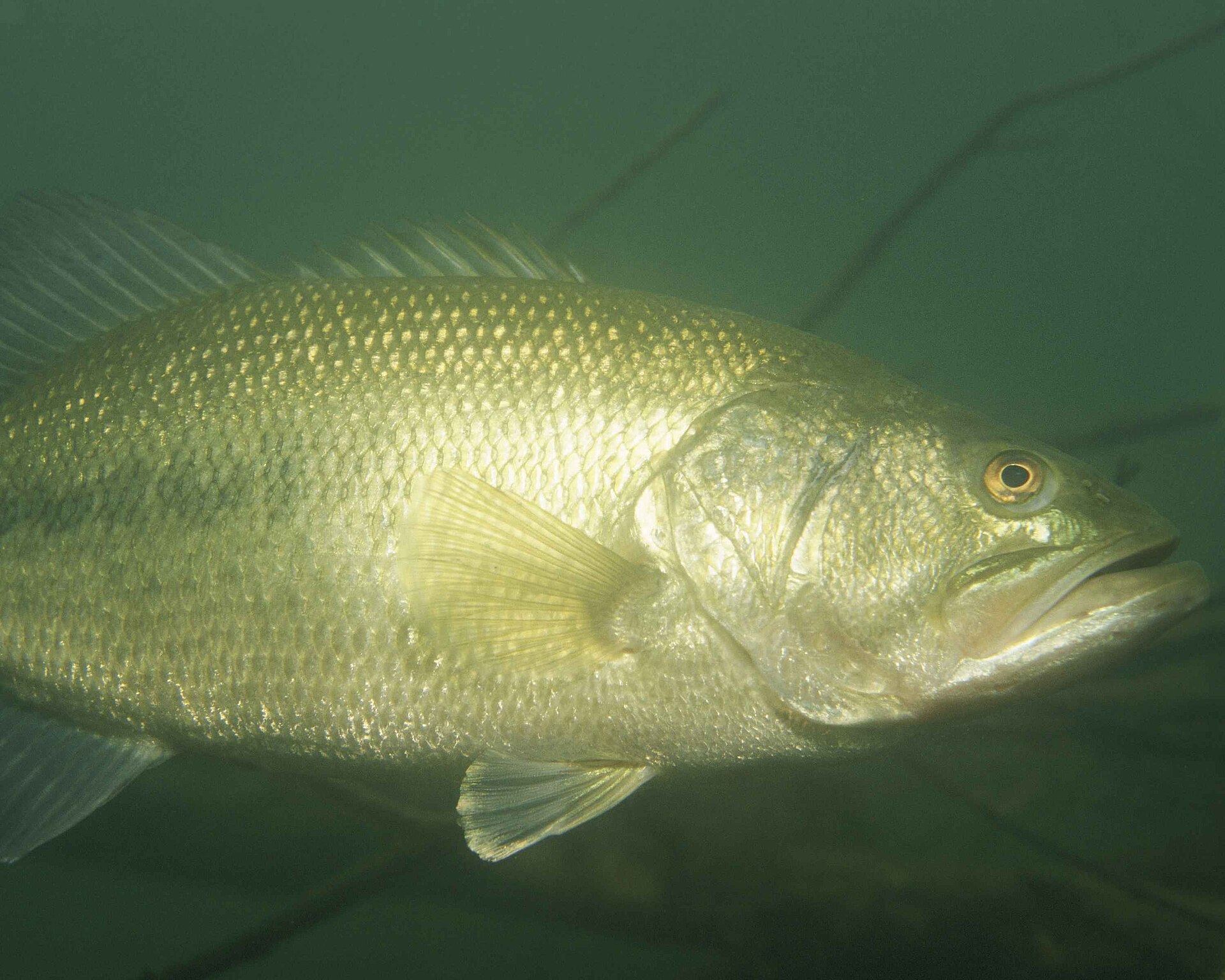
Largemouth bass. Photo: Eric Engbretson, U.S. Fish and Wildlife Service / public domain.
THE DEPTH CHART / FISH SCIENCE
When do bass spawn? Follow the thermometer.
The calendar gets you close. Water temperature gets you there. This guide pulls the spawning biology from university extension and research sources, then turns it into a prespawn-to-postspawn plan and a set of rules for fishing beds without costing a lake its next year class.
Few weeks of the year put more big bass within reach than the spawn, and few weeks put bass under more pressure. Knowing what the fish are doing, and why, makes you better at catching them and better at letting them finish the job.

Temperatures
The numbers that matter
The Southern Regional Aquaculture Center's largemouth fact sheet says bass usually spawn at 65 to 75°F, and males start building nests once the water stabilizes above 60°F (SRAC Pub. 200). A sudden drop below 60°F can make a male leave his nest, which reduces nesting success.
Largemouth bass spawning temperature bands (°F)
General guide from SRAC; local fish vary
Nest biology
What happens on a bass bed
- Location: nests are usually 1 to 4 feet deep near shore, though they have been seen as deep as 20 feet in clear water (SRAC). Firm bottom such as sand, gravel or roots is preferred.
- Size: a nest is about twice the male's body length across.
- Guarding: the male defends roughly a 6-foot zone, fans silt off the eggs, and keeps guarding the fry until they disperse, which can take two weeks or more.
- Eggs: females average about 4,000 eggs per pound of body weight, and one female has been reported carrying up to 80,000.
- Waves: not every fish spawns at once. In most lakes bass spawn in waves across several weeks, and some fish move up with each warming trend and full or new moon.
Spotted, Alabama and smallmouth bass follow a similar pattern but often nest deeper and on harder bottom. Our bass ID guide and habitat guide cover the differences.
Timing
When the spawn happens where you fish
| Region | Typical window | Notes |
|---|---|---|
| Florida and South Texas | January–April | Can start in winter; Florida bass spawn over a long season |
| Deep South | February–May | Shallow, dark-bottom pockets warm first |
| Carolinas and Mid-South (Lake Norman, Lake Wylie) | Late March–May | Warm-water discharges on Lake Norman spawn early |
| Mid-Atlantic and Midwest | Late April–June | Cold fronts can stall it for days |
| Northern U.S. and Canada | Late May–early July | Smallmouth often slightly earlier than largemouth |
These are broad estimates, not rules. A thermometer and your own fishing log are better guides; see Build a Bass Fishing Log.
On Lake Norman, Bassmaster's 2026 Open preview noted that warm-water discharges near Ramsey Creek and the NC 150 bridge make bass in those areas spawn earlier than the rest of the lake (B.A.S.S.). Our Lake Norman seasonal playbook shows how the spawn rolls into the late-April shad spawn there.
Prespawn
Prespawn: the heaviest fish of the year
When water climbs from the high 40s into the 50s, females stage on the first drop outside spawning flats: secondary points, channel swings, the last deep dock in a pocket. They're heavy with eggs and feeding.
- Find the flat, then back out. Look at a map for protected pockets with hard bottom, then fish the first break toward deeper water.
- Cover water on warm afternoons with a jerkbait, lipless crankbait or crankbait on rock.
- Slow down after cold fronts with a jig or shaky head on the same breaks.
On the beds
Sight fishing beds
Polarized sunglasses, a calm sunny day and patience do most of the work. Look for light-colored ovals on the bottom, then for the fish. A male that holds tight is guarding; a big female that drifts on and off is often the one you're after.
- Make long casts and keep the boat back so you don't spook the fish off the bed.
- Use a bait you can see (white or chartreuse tail), such as a creature bait, tube or Texas-rigged lizard, and let it sit in the bed.
- Watch the fish, not the line: a bed fish often picks the bait up and swims off a foot or two.

Postspawn
Postspawn: fry guarders and tired females
After spawning, females drift to the nearest shade and deeper cover to recover, while males guard fry. This is when topwater around fry balls, a buzz toad along docks, and swimbaits under floating docks shine. On herring and shad lakes the shad spawn often lines up with the postspawn, so fish riprap and seawalls at first light.
Ethics
Fishing the spawn responsibly
Research summarized by the American Fisheries Society found that angling for nesting largemouth can reduce spawning success, because a male pulled off the nest leaves his eggs or fry open to bluegill and other predators (AFS). SRAC also notes that a male driven off by a cold snap can abandon the nest. You don't have to give up the spawn to be part of the solution:
- Release bedding fish immediately, right where you caught them. Don't carry them across the lake in a livewell.
- Keep air time short. Our catch-and-release guide covers handling and photos.
- Know local rules. Some states and waters close or restrict bass harvest during the spawn. Check your state agency before you keep a fish.
- Leave the obvious bed alone sometimes. If a fish has been caught off a bed by every boat that passes, give it a break.
FAQ
Bass spawning FAQ
What water temperature do bass spawn at?
Largemouth usually spawn at 65–75°F, with nest building starting once water holds above 60°F (SRAC).
How long does the bass spawn last?
For an individual nest, eggs hatch in 2–4 days in the South and the male guards fry for two weeks or more. Across a whole lake, waves of fish can stretch the spawning season over several weeks.
Does the moon affect the bass spawn?
Many anglers report waves of fish moving up around full and new moons. The evidence is mostly anecdotal; water temperature and stable weather are the dependable triggers.
When do bass spawn in North Carolina?
Most Piedmont lakes, including Lake Norman and Lake Wylie, see the main largemouth spawn from late March into May, starting earlier in warm-water areas.
Sources / review date
Built on sources you can check.
Reviewed November 12, 2026. Regional windows are IntlBass estimates. See our editorial standards and the largemouth bass profile.
- Southern Regional Aquaculture Center: Largemouth Bass Biology and Life History (Pub. 200) — spawning temperatures, nests, eggs, hatching, guarding
- University of Florida IFAS Extension: Largemouth bass publication (FA204)
- American Fisheries Society: Angling for nesting largemouth bass can have negative effects on spawning success
- B.A.S.S.: Lake Norman Open preview (2026) — early spawning near warm-water discharges
Leave a Reply